
 50
50 7 minutes read
Astrid Kastberg, Managing Director of RateHawk
“By 2030, millennials and Gen Zs are going to make up three-quarters of the global workforce,” Kastberg noted. To address this powerful market segment, she summarized their core expectations: “Next-gen travelers prioritize authentic options, a personalized approach, fast response, and a cost-effective service.”
Based on her analysis, Kastberg detailed three strategic pillars that RateHawk is building on to empower its partners, and which the wider travel community can adopt to thrive.
Pillar 1: Extensive and diverse supply
Today’s travelers are not just booking a room — they are seeking an experience that aligns with their personal “vibe.” Heavily influenced by social media and pop culture, from the “White Lotus effect” to the impact of Taylor Swift’s world tour, they crave unique, photogenic, and authentic accommodations.

“Gen Z wants a place that they can experience and share — not just a bed to sleep in,” Kastberg explained. “Next-gen travelers prioritize authentic options, a personalized approach, fast response, and a cost-effective service.”
According to Skyscanner research, 60% of Gen Z travelers use social media platforms such as TikTok, Instagram, and YouTube for travel inspiration and destination discovery. For this audience, travel planning increasingly begins with visual content and creator recommendations rather than traditional search methods.
The same research also shows that 52% of Gen Z travelers actively seek unique or unconventional destinations, reinforcing growing demand for alternative accommodation formats such as cottages, glamping sites, and castles.
To meet this demand, a vast and varied inventory is non-negotiable.
“By 2030, millennials and Gen Zs are going to make up three-quarters of the global workforce.”
“Gen Z wants a place that they can experience and share — not just a bed to sleep in,” Kastberg explained. In response, RateHawk has focused on expanding its supply through direct contracting. This approach provides travel agents with unparalleled access to:
- 3.2 million accommodation options globally.
- 220,000 directly contracted properties, ensuring competitive rates and availability.
- A 41% year-over-year increase in “unusual options,” including cottages, glamping sites, and castles, directly catering to the demand for unique stays.
Price sensitivity also remains a defining characteristic of younger travelers. According to Skyscanner, nearly half of Gen Z travelers are willing to travel during off-peak periods to secure better prices and deals.
This flexibility creates opportunities for travel professionals to promote alternative destinations, dynamic packaging, and seasonal offers more effectively.
52% of Gen Z travelers actively seek unique or unconventional destinations. “Gen Z wants a place that they can experience and share — not just a bed to sleep in,” Kastberg explained.
Pillar 2: Technology-driven efficiency
The next generation of travelers is accustomed to instant communication and seamless digital experiences. For travel agents, speed and efficiency are paramount. Waiting 24 hours for a quote is no longer acceptable, especially as 27% of clients expect a response within hours.
Mobile-first behavior is especially pronounced among younger travelers. Deloitte research highlights that Gen Z and millennials increasingly expect seamless digital experiences throughout the travel journey — from inspiration and discovery to booking and support.
For travel professionals, this raises expectations around speed, accessibility, and communication. Travelers increasingly expect recommendations, quotes, and support to be delivered instantly and in mobile-friendly formats.
Technology powers this efficiency. RateHawk is investing in tech-driven infrastructure to support agents behind the scenes. Key innovations include:
- AI-powered smart search and rate matching: These tools help agents navigate a massive inventory — processing over 10 billion hotel rates daily — to find suitable options in moments.
- Enhanced mobile tools: Recognizing that agents need to be as mobile as their clients, RateHawk has seen a 45% increase in downloads of its mobile app, reflecting demand for flexible, on-the-go service.
- AI chatbots and pre-check features: These automated tools ensure booking security and handle routine checks, freeing up valuable agent time to focus on more complex client needs.
At the same time, younger travelers do not necessarilywant technology to fully replace human expertise. According to Contiki’s Voice of a Generation 2025 report, only 18% of Gen Z travelers would fully trust AI to book an entire trip independently.
Instead, technology is increasingly valued as a tool that enhances the advisor experience — helping travel professionals respond faster, personalize recommendations, and manage complexity more efficiently.
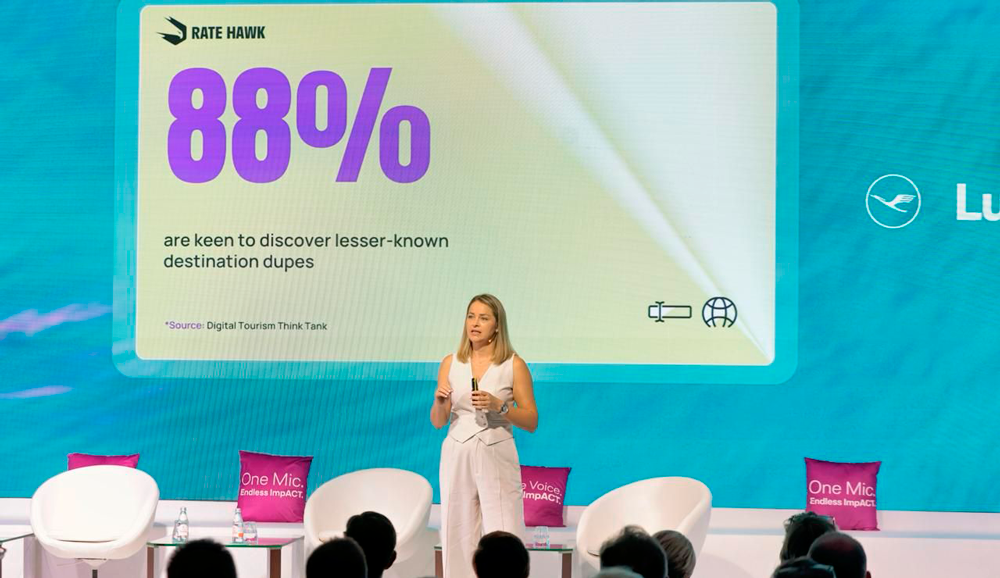
Gen Z travelers actively seek unique or unconventional destinations, reinforcing growing demand for alternative accommodation formats such as cottages, glamping sites, and castles.
Despite rapid digitalization, travel professionals continue to view technology primarily as an enabler rather than a replacement for expertise. According to ETG’s global survey of travel professionals, many advisors actively use AI tools and tech platforms to save time, improve efficiency, and streamline routine tasks while still prioritizing human interaction and personalized service.
Pillar 3: Deep personalization at every stage
Personalization for Gen Z extends far beyond using a client’s first name. It requires an individual approach at every stage of the booking journey, from initial discovery to the final offer.
To support this final step, RateHawk launched its Quotes (formerly Selection) feature in 2023. This tool allows agents to curate a personalized selection of properties and send it to clients in a branded, clickable PDF. Clients can then review the options, book, and pay instantly.
Travel professionals place especially high value on building long-term client relationships and helping clients find the right offers.
The results speak for themselves. “Over the past year, usage of this feature has tripled,” Kastberg shared. “And we’ve gotten really nice feedback from the agents saying that the conversion rates of using this feature are really good, and the customer satisfaction has increased.”
This emphasis on personalization aligns with broader industry research. ETG’s 2025 survey found that travel professionals place especially high value on building long-term client relationships and helping clients find the right offers.
For younger travelers, personalization increasingly means emotional relevance — not simply customized pricing, but recommendations that match personal interests, travel styles, and identities.
Travel as self-care and flexibility
Another important behavioral trend among younger travelers is the growing connection between travel and emotional well-being.According to Contiki’s Voice of a Generation 2025 report:
- 63% of Gen Z travelers say they travel to avoid burnout;
- 57% would trade salary growth for more vacation time.
At the same time, shorter “micro-cations” — quick 2 to 4-day trips — are becoming increasingly popular as travelers look for more flexible and budget-conscious ways to travel more frequently throughout the year.For travel professionals, this creates additional demand for flexible itineraries, fast booking processes, and personalized short-stay recommendations.
The future: A synthesis of human expertise and technology
The core message of Kastberg’s presentation was clear: teamwork. The future of travel is not about technology replacing human expertise, but rather enhancing it.
“We believe that the future of travel will be about combining human experience with technological strength,” she concluded. “If we combine both, we know about people with the best tools out there, we can truly meet and exceed the next-gen travelers’ expectations.”
This human-centric approach is also reflected in Emerging Travel Group’s 2025 global survey of travel professionals. According to the report, the most rewarding aspects of the profession are not sales-driven, but relationship-driven:
- 51% of travel professionals say they are most motivated by creating memorable experiences for clients;
- 39% are driven by positive client feedback;
- only 8% consider closing a high-value sale the most rewarding part of their work.
Interestingly, ETG’s survey also found that financial incentives rank lower than relationship-building and client satisfaction among travel professionals’ core motivations — highlighting how the role of the advisor continues to evolve from transactional selling toward experience curation and long-term trust.
While AI and automation are becoming essential operational tools, trust, emotional connection, and personalized guidance remain central to the travel experience — especially for younger travelers.
The findings reinforce a key industry trend: while AI and automation are becoming essential operational tools, trust, emotional connection, and personalized guidance remain central to the travel experience — especially for younger travelers.
As younger travelers continue to seek both digital convenience and trusted human guidance, the industry’s competitive advantage will increasingly depend on how effectively technology empowers, rather than replaces, travel professionals.
By focusing on these three pillars — diverse supply, powerful technology, and deep personalization — travel agents can confidently re-embrace their role and build lasting relationships with the next generation of travelers.